Thirty-Three Years of Executive Order 12866: Why Its Philosophy and Principles Endure
In honor of its 33rd birthday, we look at attempts to modify Executive Order 12866 over the years and the philosophy and principles that have made it so durable

Improving regulatory policy
through research, education, and outreach.

Promotes best practices for regulatory analysis

Improves regulatory processes and institutions
Serves as a source for objective information
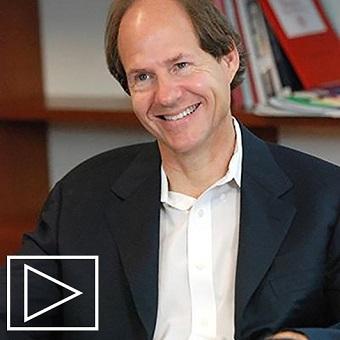
"The GW Regulatory Studies Center has done phenomenal work in cataloguing and analyzing reforms in regulatory policy...[it is] a national treasure."
Cass R. Sunstein
Robert Walmsley University Professor, Harvard
OIRA Administrator Under President Obama
The Congressional Review Act (CRA) establishes procedures for Congress to overturn final rules issued by federal agencies. After an agency's rule is reported to Congress, members of Congress have 60 days to introduce a joint resolution disapproving of the rule. When signed into law, these resolutions of disapproval (RDs) overturn the rule in question and bar agencies from issuing a "substantially similar" rule. The CRA offers two unique mechanisms: the Senate "fast-track" procedures and the "lookback" period. For an in-depth discussion of these mechanics and more, see our Regulatory Insight A Lookback at the Law: How Congress Uses the CRA.


This dashboard allows users to explore the set of final rules published in the Federal Register in 2024, and how various lookback dates could affect the set of rules available for congressional review at the beginning of the next session of Congress. View Dashboard.
Commentary:
The Continued Evolution of the Congressional Review Act. Susan Dudley & Steve Balla, April 22, 2026. Previously considered largely a tool for the incoming Congress and president to overturn a departing president's midnight regulations, Congress has recently begun using the CRA in unanticipated ways.

Thirty-Three Years of Executive Order 12866: Why Its Philosophy and Principles Endure
In honor of its 33rd birthday, we look at attempts to modify Executive Order 12866 over the years and the philosophy and principles that have made it so durable
Public Comment on FTC's Proposed Enforcement Policy Statement Regarding Personalized Pricing
The overall welfare effects of personalized pricing are as yet unknown, and the FTC's restrictions are premature.
Beyond the Sandbox: Critical Assessment of Regulatory Sandboxes for AI
Considering the conditions under which sandboxes deliver, and when alternative tools achieve comparable outcomes with greater reach and accountability
"Your input and expertise during the drafting of the Early Participation in Regulations Act of 2019 and SMART Act of 2019 was invaluable."
Joint Statement (PDF)
Senator Kyrsten Sinema (D-AZ)
Senator James Lankford (R-OK)
"The GW Regulatory Studies Center provided me with the analytical skills I needed, and gave me a sense of community as an international student."
— Ana Maria Zárate Moreno

"It is rare to find a situation where you have a community of scholars who are so accomplished all studying regulation in one place."
— Christopher Carrigan

"To make my stories authoritative I like to talk to analysts who have practical knowledge of regulatory policy, and that's why I keep returning to the GW Regulatory Studies Center."
— Cheryl Bolen
"The GW Regulatory Studies Center gives students hands on experience that I craved when I was in school. Programs like this are simply invaluable."
— Shawne McGibbon